How triple agonists work: GLP-1, GIP and glucagon
Last updated November 10, 2026
A triple agonist is one molecule built to switch on three hormone receptors at once. Each one does a different job.
GLP-1: the appetite signal
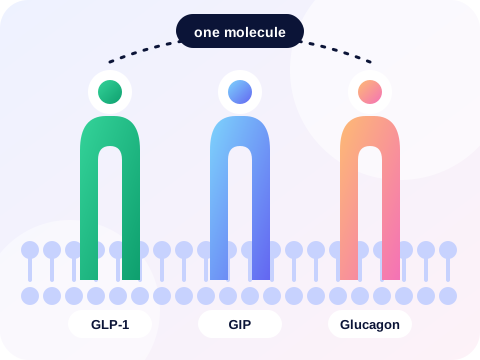
GLP-1 is released by the gut after a meal. It slows stomach emptying, tells the brain you are full and helps the pancreas release insulin when blood sugar is up. This is the receptor the first generation of weight drugs was built on.
GIP: the amplifier
GIP is a second gut hormone. Paired with GLP-1 it appears to deepen the effect on appetite and blood sugar and may soften nausea, which is one explanation for why dual agonists outperformed GLP-1 alone.
Glucagon: the energy lever
Glucagon tells the liver to release stored energy and raises energy expenditure. On its own it would push blood sugar up, which is why it only works in a molecule that also carries the GLP-1 and GIP signals to balance it.
Together
| Receptor | Main effect | Dual agonist | Triple agonist |
|---|---|---|---|
| GLP-1 | Fullness, slower digestion | ✓ | ✓ |
| GIP | Stronger appetite and sugar control | ✓ | ✓ |
| Glucagon | Higher energy expenditure | ✓ |
That third row is the reason the triple agonist, sold for research here as GLP-3RT, produced the steepest curve of the class in its trials.